


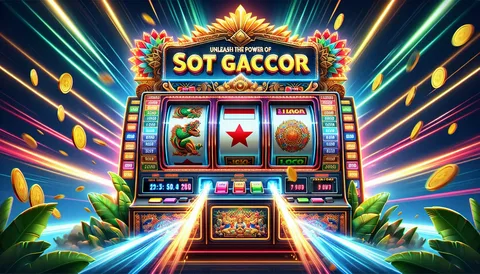
In online gaming communities, certain terms gain popularity and take on meanings that go beyond their literal definition. One such term is “slot gacor,” often used to describe games that are believed to be “frequently winning” or more rewarding than others. While widely discussed among players, this concept raises interesting questions about perception, probability, and how people interpret outcomes in digital environments.
Where the Term Comes From
The phrase “gacor” originates from Indonesian slang, loosely meaning “performing well” or “active.” When applied to slot-style games, it suggests that a particular game is currently in a favorable state, delivering more wins than usual.
However, this belief is largely shaped by shared experiences rather than technical evidence. Online forums, chat groups, and social media often amplify these ideas, creating trends around specific games at certain times.
The Reality of Randomness
At the core of most slot-based systems is a Random Number Generator (RNG). This technology ensures that each outcome is independent and unpredictable. In simple terms, no game is “due” for a win, and past results do not influence future ones.
This means that the idea of a consistently “gacor” game does not align with how these systems are designed. While it may feel like some games perform better during certain sessions, this is typically a result of natural variation rather than a fixed pattern.
Why the Belief Persists
Despite the randomness, the concept of “slot gacor” continues to thrive. This can be explained by a few psychological factors:
- Selective memory: Players tend to remember wins more vividly than losses
- Pattern recognition: Humans naturally look for patterns, even in random data
- Social influence: Hearing others talk about a “lucky” game reinforces the idea
These factors combine to create a shared narrative that feels real, even if it isn’t supported by the underlying mechanics.
Community and Shared Experience
Interestingly, the popularity of the term also highlights the social side of gaming. Players enjoy exchanging tips, discussing experiences, and recommending games to one another. In this context, “slot gacor” becomes less about accuracy and more about community interaction.
It serves as a way for users to connect, share excitement, and feel part of a larger group. This social dimension is an important part of why such terms persist and spread.
A More Informed Perspective
Understanding how randomness works doesn’t remove the enjoyment of the experience—it simply adds clarity. By recognizing that outcomes are not influenced by timing or trends, users can approach these platforms with a more balanced mindset.
Instead of chasing the idea of a “hot” game, it becomes more about enjoying the design, themes, and mechanics without unrealistic expectations.
Final Thoughts
The concept of “slot gacor” reflects how human perception interacts with digital systems. It’s a blend of language, culture, and psychology that shapes how people interpret their experiences.
For those exploring how these ideas fit into the broader landscape of online gaming, the discussion around slot gacor offers an interesting lens into player behavior and digital culture.
