


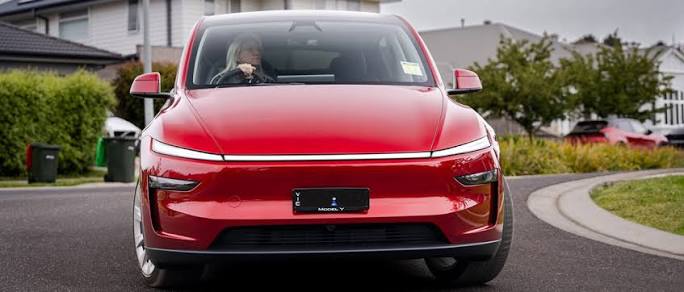
Most people only think about a roadworthy certificate when they are already under pressure. The car is sold, the buyer wants to pick it up on Saturday, and the inspection is the last box to tick. Then the report comes back with five items, the buyer gets nervous, and a straightforward sale turns into a fortnight of phone calls.
It does not have to go that way. A roadworthy inspection is one of the most predictable tests your car will ever face, because the standard barely moves and the failure points are well known. What did move in 2026 is who is allowed to inspect certain vehicles, and that change has caught out a lot of Victorian drivers who did nothing wrong except book with the wrong workshop.
Here is what is different this year, what the inspection actually covers, and how to walk in with a car that passes on the first attempt in Melbourne at Garage Full Throttle.
The 2026 change most EV and hybrid owners missed
From 1 June 2026, the Licensed Vehicle Tester inspecting an electric or hybrid vehicle in Victoria must hold a new VicRoads “EV” accreditation, and the workshop’s LVT licence must include that EV category.
This is not a formality. A tester who inspects a high-voltage vehicle without the accreditation is testing outside their category, which means the certificate they hand you is not valid. You can pay the fee, drive away happy, and discover at the transfer stage that you are back to square one.
The reason is safety, not paperwork. High-voltage drive systems carry electrocution and thermal risks that a petrol or diesel car simply does not, so the person putting the vehicle on a hoist needs specific training and equipment.
The 60-volt line
The EV category applies to any vehicle with an electric drive system rated at 60 volts DC or higher. In practice, that captures every battery electric vehicle and most full hybrids. If you drive a Tesla, a BYD, an MG ZS EV, a Nissan Leaf, a RAV4 Hybrid, an Ioniq or a plug-in hybrid such as the Outlander PHEV, you are in this group.
Mild hybrids running below 60 volts are unaffected, and petrol and diesel vehicles are inspected exactly as before. LPG vehicles continue under the existing LP accreditation. If you are not sure which side of the line your car sits on, ask before you book rather than after.
Why your usual mechanic might not qualify
This is the part that surprises owners. A workshop cannot simply decide to start testing EVs. To inspect a high-voltage vehicle under the EV category, the premises need to be equipped for it, including a carbon monoxide meter capable of reading down to 35 parts per million, a thermal imaging camera covering roughly 20°C to 400°C, a fire extinguisher of at least 9kg rated to AS/NZS 1850, and clear electrocution risk signage.
The tester also has to complete accredited EV risk and awareness training, a module of six to eight hours delivered through registered training organisations such as Kangan, Box Hill and Federation University, on top of a nationally recognised unit covering depowering of EV and hybrid systems.
That is a real investment, and plenty of workshops have not made it. Servicing your car and certifying your car are two different permissions. Businesses that have gone through the process, such as Garage Full Throttle’s EV accredited roadworthy testing in Melbourne’s north, will tell you their accreditation status straight away. A workshop that hedges when you ask is answering the question.
The 14-day rule that costs people twice
Ask around, and you will hear that a roadworthy gives you 30 days to sort out any problems. That is wrong, and the mistake is expensive.
The 30 days is how long the certificate stays valid after it’s issued. If your vehicle fails, you have 14 days to repair the listed items and return to the same tester for a re-inspection. Miss that window, and you pay for a fresh inspection from the beginning.
On a re-inspection, only the failed items get re-checked. That single detail is the strongest argument for fixing everything on the defect report at once rather than working through it item by item.
Why there is no fixed price for an RWC
Neither VicRoads nor the Victorian government sets a price for a roadworthy certificate. Every Licensed Vehicle Tester sets their own fee, which is why quotes vary so much, commonly landing between about $150 and $200 or more, depending on the vehicle’s age, type, and condition.
Two questions are worth asking before you book: what is the total fee, and is the re-inspection after repairs included at no extra charge? The answers vary more than the headline price does.
What a roadworthy inspection actually covers
A certificate of roadworthiness confirms your vehicle meets minimum safety standards for use on public roads, measured against VicRoads’ Vehicle Standards Information 26. It is a safety snapshot for the day it is issued, not a report card on reliability or condition.
Brakes, wheels and tyres. Pad and disc condition, fluid levels, hydraulic integrity and park brake effectiveness. Tyres need at least 1.6mm of tread with no cuts, bulges or damage, correct sizing and proper inflation. Brakes and tyres are the two most common first-time failures, so start your own checks here.
Steering, suspension and structure. Worn ball joints, leaking shock absorbers, perished bushings and loose steering all fail. So does structural rust around chassis rails, floor pans, suspension mounts or seat belt anchor points. Surface rust is generally fine. Rust that compromises strength is not.
Lights, seat belts, windscreen and safety components. Every external light must work, including number plate lights. Seat belts must be intact and operate correctly. The windscreen must be free of cracks in the driver’s line of sight, and wipers, washers, horn, mirrors and the VIN plate are all checked.
What it does not cover is worth knowing too. Air conditioning, electric windows and general mechanical health sit outside the scope. A brake globe can blow the morning after your inspection and the certificate remains valid.
The five most common first-time fails
- Worn brakes or low brake fluid. Squealing, a spongy pedal or a brake warning light are all early signals.
- Bald or damaged tyres. Under 1.6mm tread, uneven wear, bulges, cuts or mismatched tyres across an axle.
- A cracked or chipped windscreen. Damage in the driver’s direct line of sight is an instant fail.
- Faulty lights or indicators. Blown globes, incorrect bulb types, damaged lenses, dead number plate lights.
- Worn steering or suspension. Ball joints, shocks, bushings and loose components.
Beyond those, the ones that quietly ruin a “should pass” are exhaust leaks near the cabin, illuminated ABS, airbag, or brake warning lights, and structural rust hiding where you wouldn’t think to look.
How to prepare so you pass first time
Give yourself a week. Do a walk around with someone helping: have them press the brake pedal while you check the lights, test tread depth with a 20 cent coin, look underneath for fresh leaks, and make sure the number plates are secure. Under the bonnet, check oil, coolant and brake fluid, and look for cracked belts or corroded battery terminals.
Globes, wiper blades, washer fluid and tyre pressures cost very little and account for a surprising share of avoidable fails.
For anything beyond that, a pre-roadworthy inspection is the smarter play. It surfaces every issue in one visit, so you can repair the lot in a single session instead of failing, fixing one item, and returning. It also lets you decide whether borderline repairs are worth doing before you commit money. This guide includes a detailed breakdown of the full process, plus a printable checklist, to help you get a roadworthy certificate inspection approved on the first try in 2026.
Inspection day and what comes next
Bring your registration papers, photo ID and payment. Expect the inspection to take roughly 45 to 90 minutes, covering documentation, an exterior and under-vehicle check, brake testing, the interior and under the bonnet, and a short road test.
If you pass, an eCertificate is lodged directly into the VicRoads system, valid for 30 days from issue and usable more than once within that window for a sale, transfer, or re-registration. If you fail, you receive a defect report listing exactly what needs attention, with 14 days to fix it and return.
A few things Victorian drivers still get wrong
Transfers between spouses or domestic partners do not require a roadworthy, and dealers can buy without one. You can also legally sell a car with no RWC if you sell it unregistered, provided you cancel the registration, return the plates, and state in writing that it is being sold unregistered. For a normal private sale of a registered vehicle, the seller is legally obliged to provide a current certificate.
The rest comes down to timing. Book early, fix everything in one go, and if you drive anything with a high-voltage badge on the back, confirm the accreditation before you hand over the keys.
