


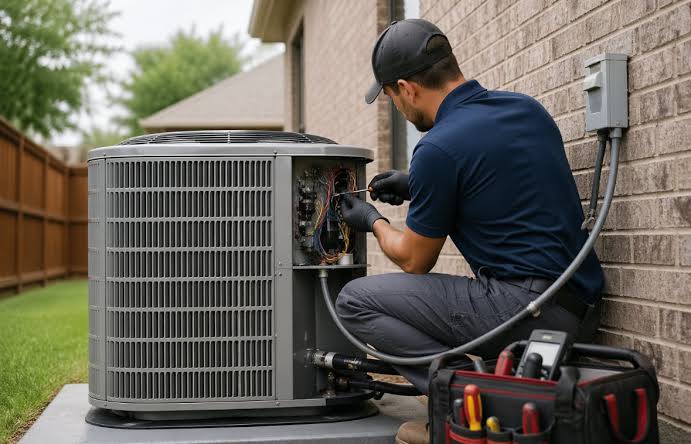
Home heating and cooling equipment has to deal with different challenges depending on where it operates. In West Texas, long stretches of heat, dry conditions, airborne dust, and heavy cooling demand can create a particularly demanding environment for residential HVAC systems.
For homeowners, understanding these local conditions can make routine HVAC care more effective. Instead of waiting until an air conditioner stops working, paying attention to airflow, cleanliness, operating patterns, and maintenance can help identify developing problems sooner.
Extreme Heat Means Longer Cooling Cycles
An air conditioner does not simply produce cold air. It continuously transfers heat from inside the home to the outdoors, which means outdoor conditions directly affect how hard the equipment must work.
During a mild day, a properly functioning system may reach the thermostat setting relatively quickly and cycle off. During sustained West Texas heat, cooling cycles can become considerably longer.
Long operating periods are not automatically a sign that something is wrong. However, they make existing problems more noticeable. A dirty coil, restricted filter, weak blower, duct leak, or aging component may have a much greater impact when the equipment is already operating under demanding conditions.
Homeowners should pay attention to changes rather than focusing on runtime alone. Warning signs can include:
- Rooms taking significantly longer to cool than usual
- The system running continuously without reaching the thermostat setting
- Noticeably weaker airflow from vents
- Large temperature differences between rooms
- New noises during startup or operation
- Unexpected increases in electricity use
These symptoms do not identify a specific mechanical problem on their own, but they can indicate that an inspection is worthwhile.
Dust Can Affect More Than Household Surfaces
Anyone familiar with West Texas knows that dust does not stay outdoors. Fine particles can enter homes through doors, windows, small gaps, and normal daily activity.
An HVAC system circulates large amounts of indoor air, making filtration an important part of both system maintenance and household cleanliness.
When an air filter becomes heavily loaded, airflow can become restricted. The blower then has to move air through increased resistance, and the overall system may have more difficulty maintaining comfortable temperatures.
This is why filter replacement schedules should be treated as guidelines rather than rigid deadlines. A filter that performs adequately for a certain period in one household might need attention much sooner in another.
Factors affecting filter conditions include pets, remodeling projects, household occupancy, local dust levels, and how frequently the HVAC equipment operates.
Homeowners can make filter inspections part of a simple monthly household routine. Checking does not necessarily mean replacing the filter every month; it simply makes it easier to recognize when conditions have changed.
Ductwork Plays an Important Role in Comfort
The air conditioner and furnace often receive most of the attention, but the duct system connecting the equipment to individual rooms is equally important.
Conditioned air has to travel through this network before reaching living spaces. If ductwork is damaged, disconnected, poorly sealed, or otherwise compromised, some of that air may never reach its intended destination.
This can create frustrating situations in which the HVAC equipment appears to be operating normally but the house still does not feel comfortable.
Potential signs of duct or airflow problems include rooms that are consistently hotter or colder than others, unusually weak airflow at certain vents, excessive dust around registers, and noticeably long heating or cooling cycles.
Older homes can present additional challenges because ductwork may have been modified, repaired, or extended multiple times over the years.
A professional evaluation can help determine whether the comfort problem originates with the HVAC equipment itself or with the system responsible for distributing conditioned air throughout the house.
Preventive Maintenance Matters Before Peak Weather Arrives
The most inconvenient time to discover an air-conditioning problem is during a period of intense summer heat.
Preventive maintenance provides an opportunity to inspect equipment while it is still operational. Depending on the system and service being performed, a technician may examine electrical components, coils, drainage, airflow, thermostat operation, and other important areas.
Maintenance cannot guarantee that equipment will never break down. Mechanical systems contain components that eventually wear out. However, inspections can sometimes uncover developing concerns before they cause a complete loss of heating or cooling.
Timing also matters.
Scheduling cooling-system maintenance before the hottest part of the year gives homeowners an opportunity to address known problems before the equipment enters its heaviest operating season. Heating equipment can similarly be inspected before colder weather becomes consistent.
Homeowners who want a local perspective on HVAC maintenance, repair, installation, ductwork, and indoor air concerns can review information from the Cain’s Cool Air team when considering the types of services that may be relevant to a West Texas home.
Small Comfort Changes Can Provide Useful Clues
Many HVAC problems initially appear as minor inconveniences rather than complete equipment failures.
Perhaps one bedroom suddenly feels warmer. Maybe the air coming from the vents does not seem as strong as it did last summer. The system might start making a sound that was not present previously.
These changes are worth noticing.
Homeowners do not need to diagnose the mechanical cause themselves. In fact, attempting electrical or refrigerant-related HVAC repairs without appropriate training can create unnecessary risks. Instead, the homeowner’s role can simply be recognizing that something has changed and providing useful observations to a technician.
Keeping a short record can help. Note when the problem occurs, which rooms are affected, whether it happens at a particular time of day, and whether the thermostat appears to be functioning normally.
Those details may make troubleshooting easier.
When Repair and Replacement Both Deserve Consideration
Eventually, every HVAC system reaches a point when homeowners have to decide whether another repair makes sense.
There is no universal age or single repair cost that automatically determines the answer. Equipment condition, maintenance history, repair frequency, comfort performance, and the nature of the current problem should all be considered.
A useful evaluation can include questions such as:
- Has the equipment required multiple repairs recently?
- Does it still maintain reasonably consistent indoor temperatures?
- Are major components showing significant wear?
- Has energy consumption changed substantially?
- Would a repair address the underlying problem or only provide a temporary solution?
- Are there ductwork or airflow issues that should be corrected regardless of the equipment decision?
Homeowners should consider the overall system rather than viewing the outdoor unit, indoor equipment, thermostat, and ducts as completely separate components.
Sometimes improving airflow or correcting another underlying issue can make a significant difference. In other cases, aging equipment may no longer provide the reliability a household needs.
A Practical Approach to HVAC Care in West Texas
West Texas homeowners cannot control outdoor temperatures or eliminate every particle of dust, but they can take practical steps to reduce unnecessary stress on their heating and cooling equipment.
Regularly checking filters, keeping vents unobstructed, monitoring changes in airflow, and scheduling periodic professional inspections are relatively straightforward habits. Homeowners should also keep the outdoor unit reasonably clear of debris and avoid placing objects where they interfere with normal airflow.
Most importantly, become familiar with how the HVAC system behaves when it is working properly.
Normal operating sounds, typical cooling times, airflow strength, and room temperatures create a useful baseline. When something changes noticeably, homeowners can investigate sooner rather than waiting for a complete breakdown.
Conclusion
HVAC systems in West Texas operate in an environment shaped by intense summer heat, dry conditions, dust, and extended periods of heavy use. Those conditions make routine attention especially valuable.
A proactive approach does not require homeowners to understand every component inside an air conditioner or furnace. It simply means keeping filters and airflow in mind, recognizing unusual changes, maintaining equipment appropriately, and seeking qualified help when a problem goes beyond basic homeowner maintenance.
When heating and cooling equipment is treated as a complete system rather than something to think about only when it fails, homeowners are better positioned to maintain consistent comfort through the demanding West Texas seasons.
