


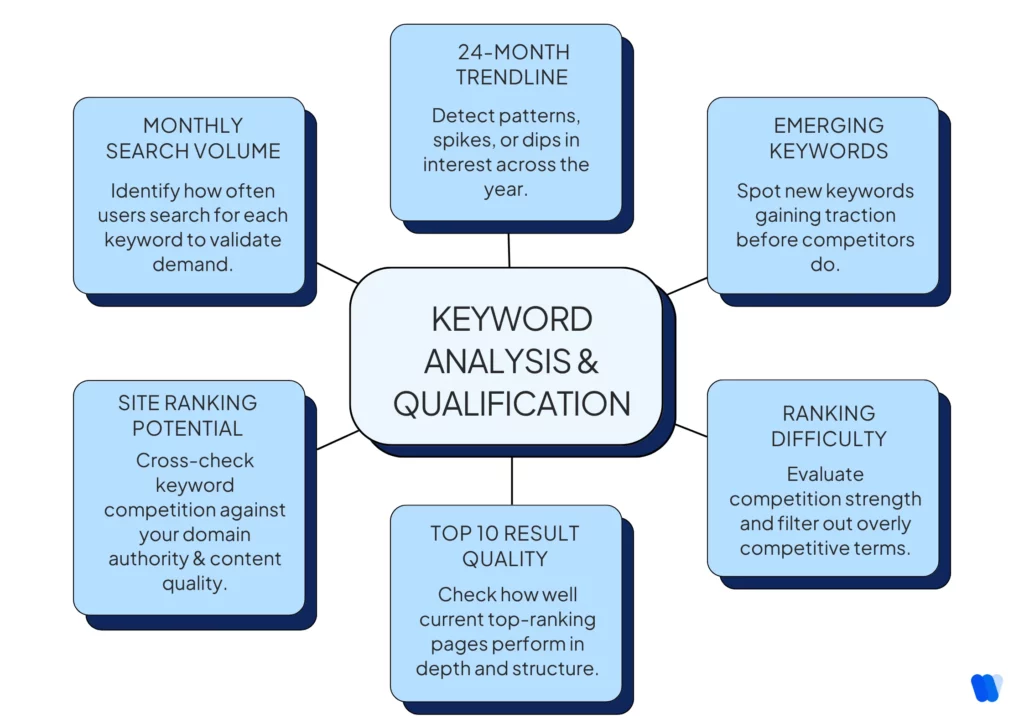
Keyword research becomes useful when it changes a page, priority, or customer decision. This article examines refreshing an old keyword list for organisations serving Canada. The objective is to improve current demand coverage and useful page assignments without turning a keyword tool into a substitute for market knowledge. The method combines search-result observation, customer language, business economics, and a realistic assessment of what the website can publish and support.
Has the business changed
Remove discontinued offers and add new products, locations, audiences, and priorities. A historic high-volume term should not keep its place when the company no longer wants or can serve that demand.
Test has the business changed on a limited query group before applying it across the site. Note the source, page owner, expected effect, and review date. Judge the outcome through current demand coverage and useful page assignments, and confirm that any gain comes from visitors whose needs the business can actually meet.
Are the measurements comparable
Check the source, country, device, match type, date, and units behind old and new figures. Tool estimates can change methodology, so a difference does not always represent a real shift in demand.
Turn are the measurements comparable into a visible mapping decision. Name the affected queries and URL, preserve the supporting evidence, and explain what would disprove the choice. Later analysis of current demand coverage and useful page assignments should refer back to that record rather than a reconstructed explanation.
When external expertise is needed for refreshing an old keyword list, compare internal capacity with providers offering seo services in lahore. Review their research process, implementation scope, reporting, and ability to explain why a recommendation fits the assigned market.
Has search intent moved
Review current results for important terms. New result features, dominant formats, or changed meanings may require a different page type even when the words and estimated volume look stable.
Use customer evidence to check has search intent moved. Sales questions, support requests, onsite searches, and rejected leads can reveal whether the selected language describes a valuable need. Compare those signals with current demand coverage and useful page assignments before expanding the page or topic.
Which pages already perform
Add current impressions, clicks, landing pages, conversions, and query variants. Protect terms that produce valuable traffic and investigate whether unexpected URLs indicate overlap or a mapping problem.
Give which pages already perform a clear boundary. State which audience, location, page type, and stage of decision it covers, then list nearby subjects it deliberately excludes. This boundary makes changes in current demand coverage and useful page assignments easier to interpret and reduces overlapping briefs.
What language do customers now use
Compare the list with recent calls, chats, reviews, internal searches, and sales objections. Product terminology often changes faster than an annual keyword spreadsheet.
Assign an owner to validate what language do customers now use after implementation. The check should include the live page, search queries, internal links, conversion tracking, and any release notes. If current demand coverage and useful page assignments moves unexpectedly, investigate the implementation before replacing the research conclusion.
Which topics deserve external visibility
Guest blogging services may support strong resources or commercial pages when the publication and audience fit. Mark promotion candidates only after confirming page quality and the purpose of each reference.
Assess the cost of which topics deserve external visibility as well as its potential. Writing, design, technical changes, review, and promotion may be required before the page is competitive. Compare that full effort with the likely contribution to current demand coverage and useful page assignments and other approved opportunities.
Promotion related to refreshing an old keyword list should use publications that serve a relevant audience. A provider described as a guest blogging services should still disclose placement criteria, editorial process, destination requirements, and reporting so the campaign can be reviewed on quality as well as quantity.
What should be merged or removed
Consolidate duplicates, label intent, group variants, and archive irrelevant phrases with a reason. Preserve historical fields separately so the team can understand changes without using obsolete data for planning.
Document uncertainty around what should be merged or removed instead of hiding it in a score. Mark weak volume estimates, mixed intent, unfamiliar markets, and missing conversion data. A smaller test can improve confidence before the company commits resources intended to raise current demand coverage and useful page assignments.
Who owns the refreshed map
Assign page owners, review dates, and a process for adding discoveries. A keyword list becomes stale quickly when nobody is responsible for connecting it to briefs, pages, and reporting.
Close the work on who owns the refreshed map with a decision another person can follow. Specify whether to create, improve, merge, redirect, monitor, or reject the page idea, and give the reason. Schedule a review when new evidence about current demand coverage and useful page assignments is likely to be available.
Practical Review
Before approving further work on refreshing an old keyword list, compare the final keyword group with live search results and the page that will own it. Confirm that the page format matches the dominant need, the company can support its claims, and measurement captures a meaningful action. Keep rejected ideas with short reasons; they prevent repeated debates and show whether a later market change justifies reconsideration. For Canada, review geographic wording and service availability rather than assuming that a global dataset represents local demand. A sound review ends with one of four choices: improve an existing page, create a genuinely distinct page, combine overlapping material, or take no action. Each choice should name an owner and a future review date.
Final Takeaway
Effective refreshing an old keyword list connects the language of search with an identifiable customer need and a page capable of meeting it. The priority is not the largest spreadsheet. It is a defensible set of decisions that can improve current demand coverage and useful page assignments and be updated when evidence changes.
The working file for refreshing an old keyword list should preserve sources, dates, filters, page assignments, and unresolved questions. That record lets another reviewer reproduce the reasoning instead of accepting a score without context. It also helps writers avoid overlapping briefs, developers understand page dependencies, and managers see why a lower-volume opportunity may receive priority. After publication, compare actual queries and conversions with the original assumptions. Update the map when the audience uses different language, the wrong URL appears, or the page attracts interest without contributing to current demand coverage and useful page assignments. A keyword decision remains provisional until real behaviour supports it.
