


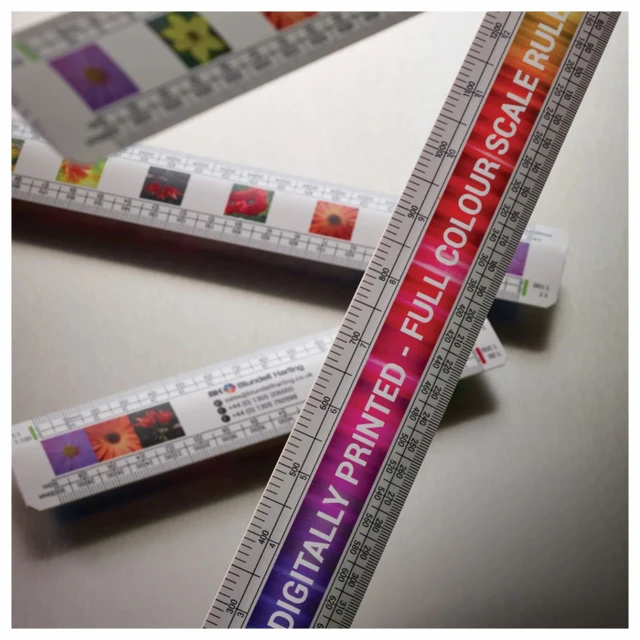
Precision, Practicality and a Place on the Desk
In surveying, architecture and technical drawing, accuracy is fundamental. The right tools help professionals interpret plans, communicate dimensions and complete their work with confidence. For businesses looking for promotional scale rulers Brisbane professionals can use in their daily work, these specialised measuring tools offer a practical alternative to conventional branded giveaways.
Unlike a standard ruler, a scale ruler is designed to help users interpret or prepare drawings at a specified scale. This makes it particularly relevant to surveyors, architects, draftspeople, engineering teams and students learning technical drawing.
For businesses supplying these industries, a custom-branded scale ruler can connect a company’s identity with a tool that has a clear professional purpose. Its value lies not simply in displaying a logo but in providing an item that recipients may find useful during study, planning or technical work.
The most effective approach is to combine functional accuracy, appropriate product selection and clear branding. When these elements are considered together, a scale ruler can become a thoughtful addition to a professional merchandise programme.
Understanding What Makes a Scale Ruler Different
A conventional ruler measures physical lengths directly. A scale ruler, by contrast, supports work involving drawings that represent objects or spaces at a defined ratio.
For example, an architectural drawing may represent a building at a reduced scale. A compatible scale ruler allows the user to interpret distances on that drawing according to the selected scale without first converting every measurement manually.
The correct tool depends on the drawing conventions and the task being undertaken.
Designed for Technical Work
Scale rulers commonly feature several graduated edges or scales. Depending on the design, these may support different drawing ratios used in architectural, engineering or other technical applications.
The graduations must be clearly marked and appropriate for the intended purpose. A user interpreting a drawing needs to know which scale applies and must select the corresponding graduation.
A scale ruler should not be confused with a general-purpose measuring device. Its graduations are intended for specific drawing scales, and selecting the wrong one can produce an incorrect interpretation.
For professional applications, users should follow the drawing’s stated scale and any relevant project documentation.
Why Tool Selection Matters
Not every scale ruler suits every profession. Architectural drawings, engineering plans and surveying documents may use different conventions depending on the project and the applicable standards.
Before ordering merchandise, businesses should identify the intended users and determine which ruler format is most appropriate.
Consider the following questions:
- Which drawing scales do the recipients commonly encounter?
- Is a triangular ruler or a flat scale ruler more appropriate for their work?
- Are the graduations clear and easy to distinguish?
- Is the ruler suitable for professional use or primarily intended for educational purposes?
- Can the supplier confirm the accuracy and specifications of the finished product?
These details matter more than decorative features alone. A branded measuring tool should perform its intended function reliably.
Surveyor Branded Merchandise That Reflects the Profession
Surveying involves measuring, mapping and gathering spatial information to support activities such as land development, construction and infrastructure projects. Surveyors may work across outdoor sites, offices and project environments, so the tools and equipment they use vary considerably.
For suppliers and organisations serving this sector, relevant merchandise can be more meaningful than a generic giveaway.
A Useful Connection to Technical Work
A scale ruler may suit recipients who regularly interpret scaled drawings, particularly when their work includes plans and technical documentation.
Potential audiences include:
- Surveying businesses and their technical teams
- Construction and engineering consultancies
- Land development professionals
- Students studying surveying or related disciplines
- Training providers and technical education organisations
The key is to understand the recipient’s actual responsibilities. Not every surveyor needs the same type of ruler, and a scale ruler should not be presented as a replacement for surveying instruments or field equipment.
For companies that regularly communicate with technical professionals, a well-chosen ruler can demonstrate an understanding of their work.
Linking Merchandise to a Professional Relationship
Promotional products can support existing business relationships when they are relevant to the recipient.
For example, a supplier attending an industry exhibition could include a suitable ruler in a technical information pack. An education provider might distribute rulers to students whose coursework involves scaled drawings.
A construction-related business could also consider adding a scale ruler to a welcome pack for staff or clients who work with plans.
These uses are most effective when the product complements the surrounding information or activity rather than being distributed without context.
Architectural Custom Scale Rulers for Design Teams
Architecture relies on communicating spatial relationships through drawings, plans and models. Scale rulers can assist with interpreting those representations, making them relevant to many architectural and design environments.
For businesses serving architects, the opportunity is to provide a product that respects the technical nature of the profession while presenting the brand clearly.
Choosing the Right Format
Different ruler designs offer different advantages.
A triangular scale ruler can provide multiple scales along its faces, while a flat scale ruler may offer a straightforward format that is easy to store with documents or stationery.
The best option depends on the user’s workflow and preferred drawing conventions. A product intended for architectural practice should provide appropriate scales and legible graduations.
Businesses should avoid choosing a design solely because it offers more space for a logo. The measuring function remains the primary consideration.
Branding Without Compromising Accuracy
Customisation should not interfere with the ruler’s graduations or make important markings difficult to read.
Before approving artwork, check the available branding area and ask the supplier how the design will be applied. Printed logos, business names and other visual elements should remain separate from functional measurement markings.
A restrained design is often appropriate for professional technical merchandise. It can provide brand recognition while preserving the clean appearance expected of a working tool.
A quality review should include both the printed branding and the ruler itself. Clear graduations, suitable materials and a well-finished surface all contribute to the product’s usefulness.
Drafting Promotional Giveaways for Education and Industry
Technical drawing is an important part of many design, construction and engineering disciplines. Students and professionals may use scaled drawings to communicate dimensions, examine layouts and develop an understanding of spatial relationships.
For organisations supporting these fields, drafting-related merchandise can connect a brand with a relevant learning or working activity.
Supporting Students and Training Programmes
Students learning technical drawing need to understand the relationship between a drawing’s scale and the dimensions it represents.
A suitable scale ruler can support this learning process by helping students interpret scaled plans. However, the tool must match the conventions taught in their course, and students should understand how to select the correct graduation.
Educational institutions and training providers can consider scale rulers for orientation packs, workshops or course-related materials.
When choosing products for students, it is useful to consult teaching staff before ordering. Their input can help identify appropriate scales, product formats and durability requirements.
Reaching Professional Audiences at Industry Events
Trade shows and professional events create opportunities for businesses to introduce their services to relevant audiences.
A technical giveaway can help establish a connection between the business and the recipient’s work. For example, a supplier of drafting equipment may choose a scale ruler that complements its broader product offering.
The product should be accompanied by a clear explanation of the company’s services where appropriate. A branded object alone does not explain what a business does or why a potential customer should contact it.
Comparing Scale Rulers With Other Technical Merchandise
Scale rulers are not the only practical option for businesses working with surveying, architecture and drafting professionals. The right selection depends on the intended use and the recipients’ working habits.
| Product | Potential use | Main selection consideration |
| Scale ruler | Interpreting scaled technical drawings | Correct scales and clear graduations |
| Standard ruler | Measuring straight lengths | Measurement accuracy and durability |
| Notebook | Recording observations and project notes | Paper quality and portability |
| Technical pen | Producing notes or drawings | Writing performance and suitability |
| Document folder | Organising plans and paperwork | Capacity and material quality |
| Measuring tape | Measuring physical distances | Appropriate range and construction |
This comparison highlights an important principle: promotional merchandise should be selected according to the task it supports.
A scale ruler is most relevant when the recipient works with scaled drawings. For someone whose work involves mainly field measurements or general administration, another product may be more useful.
How to Evaluate Suppliers and Customisation Options
Ordering branded technical merchandise requires attention to both product performance and presentation. Businesses should assess suppliers carefully rather than choosing solely on the appearance of a product image.
Check the Product Specifications
Request details about the ruler’s material, dimensions, available scales and intended application.
Ask whether the product is designed for architectural, engineering or another technical use. Confirm that the markings are appropriate for the intended audience and that the supplier can provide reliable information about measurement accuracy.
If the ruler will be used for professional work, quality should take priority over decorative features.
Review the Branding Process
Artwork requirements may vary depending on the ruler’s shape and material.
Ask the supplier to explain the available print areas, colour options and limitations. Review the artwork proof carefully and make sure the design does not obscure any graduations.
Where possible, inspect a physical sample before approving a larger order. This can reveal issues with print clarity, surface finish or legibility that are less obvious on a screen.
Plan for Delivery and Distribution
Businesses ordering merchandise for an exhibition, training programme or client event should allow time for artwork approval, production and delivery.
It is also worth considering how the rulers will be packaged and transported. Suitable packaging can protect the product during transit and help keep the finished merchandise in good condition.
Maintain approved artwork and product specifications so that future orders can remain consistent with the original design.
Questions Businesses Often Ask
What is the difference between a scale ruler and a standard ruler?
A standard ruler measures physical lengths directly. A scale ruler is designed to interpret or create scaled drawings using specific graduations that correspond to drawing ratios.
Who benefits most from a branded scale ruler?
Architects, draftspeople, engineering professionals, surveying teams and students may find one useful when their work or studies involve scaled drawings. Suitability depends on the scales they use.
Can a company logo affect the ruler’s function?
It can if the branding obscures graduations or interferes with readability. Artwork should be placed in a suitable area and reviewed before production.
What should I check before ordering?
Confirm the intended scales, product accuracy, material, print quality and suitability for the recipients. Ask the supplier for specifications and a sample when practical.
Are scale rulers appropriate for every technical business?
No. They are most relevant to organisations whose staff or customers regularly work with scaled drawings. Other technical tools may be more appropriate for businesses focused on different tasks.
A Practical Tool With a Professional Purpose
A scale ruler offers more than a surface for promotional branding. When selected carefully, it provides a direct connection between a business and the technical work its audience performs.
For organisations serving surveying, architecture, drafting and engineering communities, the strongest approach is to begin with functionality. Identify the intended users, confirm the required scales and choose a product that meets their working needs.
Next, ensure the branding is clear without interfering with measurement markings. Review supplier specifications, assess the finished product’s quality and plan distribution around a relevant professional activity.
A useful promotional product should never need to compete with the task it is designed to support. By combining technical suitability with thoughtful customisation, businesses can create merchandise that reflects their understanding of the industry and provides recipients with a practical reason to retain it.
