


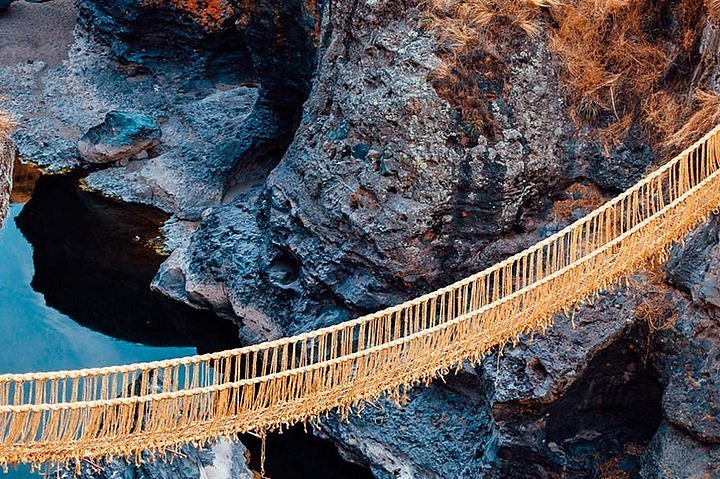
Hidden deep in the Andean highlands of southern Peru lies one of the most extraordinary living legacies of the Inca civilization. Qeswachaka Cusco is not just a destination; it is a powerful symbol of community, history, and ancestral engineering that has survived for more than 500 years. Suspended above the roaring Apurímac River, this handmade rope bridge is rebuilt every year using the same techniques practiced by the Incas, making it the last remaining Inca bridge still in use today.
Visiting Qeswachaka is a journey into the past, where tradition, culture, and breathtaking landscapes come together in an unforgettable experience.
What Is Qeswachaka?
Qeswachaka is a traditional Inca rope bridge made entirely from natural ichu grass, spanning approximately 28 meters (92 feet) across the Apurímac River. Located in the Canas Province, about 160 kilometers southwest of Cusco, the bridge forms part of the ancient Qhapaq Ñan, the vast Inca road system that once connected the empire.
Unlike modern bridges built of steel or concrete, Qeswachaka is constructed using hand-twisted grass ropes, bound together with precise knots and tension systems perfected centuries ago. What makes it truly remarkable is that the bridge is rebuilt from scratch every year during a traditional festival carried out by local Quechua communities.
The Cultural Importance of Qeswachaka Cusco
Qeswachaka is far more than an engineering wonder. It represents living heritage, recognized by UNESCO in 2013 as an Intangible Cultural Heritage of Humanity.
Annual Reconstruction Ceremony
Each year in June, four local communities—Huinchiri, Chaupibanda, Choccayhua, and Ccollana—come together to dismantle and rebuild the bridge in a powerful ritual that lasts four days. This ceremony includes:
- Ancestral prayers to Pachamama (Mother Earth)
- Collective rope weaving by women
- Precise bridge construction by skilled men
- Traditional music, dancing, and communal feasts
The event reinforces values of ayni (reciprocity), minka (community work), and collective responsibility, which were fundamental to Inca society and remain central to Andean life today.
Where Is Qeswachaka Located?
Qeswachaka Cusco is situated at an altitude of approximately 3,700 meters (12,140 feet) above sea level, overlooking a dramatic canyon carved by the Apurímac River.
Distance from Cusco
- Travel time: 4 to 5 hours by road
- Region: Canas Province, southern Cusco
- Access: Best reached on a guided day tour
The route itself is scenic, passing through traditional Andean villages, highland plains, and crystal-clear lagoons, making the journey as rewarding as the destination.
How to Visit Qeswachaka from Cusco
Qeswachaka Day Tour
Most travelers visit Qeswachaka on a full-day tour from Cusco, which typically includes:
- Early morning pickup from your hotel
- Scenic drive through the southern Andes
- Visits to nearby lagoons such as Pomacanchi, Acopia, Asnaqocha, or Pampamarca
- Guided explanation of Qeswachaka’s history and construction
- Time to walk across the bridge
- Traditional lunch in a local community
- Return to Cusco in the evening
A guided tour is highly recommended due to the remote location and the cultural significance of the site.
Walking Across the Qeswachaka Bridge
Crossing the bridge is both thrilling and humbling. As you step onto the handwoven ropes, you’ll feel the bridge gently sway beneath your feet while the river rushes far below.
What to Expect
- The bridge moves naturally—this is normal and safe
- Wooden slats form the walkway, secured by rope railings
- Crossing takes about 1–2 minutes
- Those with a fear of heights can cross slowly or simply observe
Walking across Qeswachaka is a once-in-a-lifetime experience that connects you physically and spiritually to the ancient Inca world.
Best Time to Visit Qeswachaka Cusco
Dry Season (May to September)
- Best weather conditions
- Clear skies and dramatic canyon views
- Peak tourism season
- Ideal for photography
Festival Season (June)
- Witness the annual bridge reconstruction
- Unique cultural immersion
- Limited availability and more visitors
Rainy Season (October to April)
- Fewer tourists
- Greener landscapes
- Occasional rain and muddy roads
For most travelers, May to August offers the best balance of weather and accessibility.
What to Bring for Your Visit
Because Qeswachaka Cusco is located at high altitude and in a remote area, proper preparation is essential.
Packing List
- Warm layers (weather changes quickly)
- Comfortable walking shoes
- Sun protection (hat, sunscreen, sunglasses)
- Water and light snacks
- Camera or smartphone
- Cash for local purchases or tips
Altitude sickness is possible, so spending a few days in Cusco beforehand helps with acclimatization.
Qeswachaka and the Inca Road System
The bridge was a crucial part of the Qhapaq Ñan, the Inca Empire’s extensive road network that stretched over 30,000 kilometers across South America. These bridges allowed messengers, armies, and traders to cross deep canyons where stone bridges were impossible.
Qeswachaka is the only surviving example of these bridges still maintained according to original Inca techniques, making it a priceless historical artifact.
Responsible Tourism at Qeswachaka
Visiting Qeswachaka Cusco comes with responsibility. This is not just a tourist attraction—it is a sacred, functional structure for local communities.
How to Be a Respectful Visitor
- Follow your guide’s instructions
- Avoid damaging or pulling on the ropes
- Ask before photographing local people
- Support community-run services and restaurants
- Respect cultural traditions and rituals
Your visit directly contributes to the preservation of this living heritage.
Why Visit Qeswachaka Cusco?
Qeswachaka offers something truly rare in modern travel: authentic connection. It is a place where ancient knowledge is not displayed behind glass but actively practiced by people whose ancestors built the Inca Empire.
By visiting Qeswachaka Cusco, you experience:
- A living Inca tradition
- Spectacular Andean landscapes
- Deep cultural immersion
- A meaningful alternative to crowded tourist sites
For travelers seeking history, culture, and authenticity, Qeswachaka is one of the most rewarding destinations in Peru.
Final Thoughts
Qeswachaka Cusco stands as a powerful reminder that the past does not have to disappear—it can live, breathe, and evolve through tradition. This humble rope bridge, renewed each year by human hands and collective memory, connects not only two sides of a canyon but also generations of Andean culture.
Whether you are a history enthusiast, adventure traveler, or cultural explorer, visiting Qeswachaka will leave you with a deeper appreciation for the ingenuity and resilience of the Inca civilization and the communities that continue to honor it today.
