


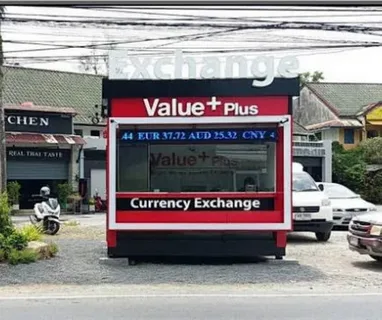
If you’re traveling to Phuket, it won’t take long before you see exchange boards everywhere—outside malls, near beaches, and around busy tourist streets. Most visitors quickly end up searching for Phuket currency exchange rates because the rate you see in one place rarely matches what you see in another.
And that’s not because anyone is trying to confuse you. It’s because currency exchange in Phuket operates like a living market—changing throughout the day depending on demand, supply, and how you choose to exchange.
Why Phuket Exchange Rates Are Different From “Google Rates”
Many travelers assume the rate shown on Google is the real rate. Technically, Google usually shows a mid-market rate (the rate banks use when trading large volumes).
But exchange services in Phuket work differently. They set rates based on:
- Their buying and selling margins
- Daily currency movement
- Cash availability (especially during peak tourist season)
- Risk and volatility in certain currencies
- The method of exchange (cash vs card vs transfer)
So if you exchange money in Phuket, you should expect a slightly different rate than what online converters show.
The Most Important Thing People Miss: Buy vs Sell
This is one of the most common misunderstandings.
Most exchange boards show two columns:
- Buy rate: the exchange buys your currency (you receive THB)
- Sell rate: the exchange sells you that currency (you pay THB)
If you’re bringing USD, EUR, or RUB and want Thai baht, you’re looking at the rate where the exchange is buying your foreign currency.
Many travelers accidentally look at the wrong column and assume they’re getting a better deal than they actually are.
Why Your Exchange Rate Can Change Based on Your Payment Method
In Phuket, your exchange rate may depend heavily on whether you exchange:
Cash
This is the simplest method and usually the easiest to understand. The exchange rate is displayed, and you receive baht immediately.
Bank card / transfer
Rates can vary because card processing adds extra costs and sometimes includes limits or different rate tiers.
ATM withdrawal
This can look convenient, but it often includes multiple layers of cost: local ATM fees, your home bank’s fees, and sometimes unfavorable conversion if you accept the wrong option at the ATM.
That’s why two travelers exchanging the “same amount” can walk away with different totals.
Why Some Currencies Have Multiple USD Rates
If you’ve ever noticed that the USD rate changes depending on the banknote size or type, that’s not random.
In tourist-heavy areas like Phuket, some exchange providers apply different rates based on:
- Small USD bills vs large bills
- Older notes vs newer notes
- Damaged or marked notes
This happens because smaller bills are harder to manage in bulk and older notes can be harder to re-sell or deposit.
So if you’re carrying 100 USD in mixed notes, you may not get one clean rate for everything.
What “Updated at” Time Really Means
Many exchange services in Phuket show the exact time when rates were last updated. This matters more than people think.
If a rate was updated hours ago, it may no longer match the current market—especially during volatile periods. Phuket is heavily influenced by tourism, and exchange demand can spike during:
- Holiday travel seasons
- Weekend arrival rush
- Major global currency movements
Checking the latest update time helps you avoid exchanging based on outdated rates.
Phuket’s Exchange Environment: Tourist Convenience vs Real Value
Phuket has two types of exchange situations:
High-convenience exchange points
These are near beaches, nightlife zones, hotels, and tourist hubs. They are fast, but you often pay a premium for convenience.
Rate-focused exchange providers
These are usually more structured, with clear offices, posted rates, and often more payment options. They tend to attract travelers exchanging larger amounts or people staying longer.
If you’re exchanging a small amount for daily spending, convenience may matter more. If you’re exchanging larger sums, the rate difference becomes more meaningful.
A Practical Way to Track Phuket Currency Exchange Rates
Instead of checking rates once and exchanging immediately, experienced travelers often do this:
- Check the rate at least twice (morning vs afternoon)
- Compare cash vs non-cash options
- Confirm if the exchange has different rates for different banks/cards
- Ask whether there are conditions for smaller amounts
This approach takes a few minutes but can save a surprising amount over a longer trip.
Final Thoughts
Understanding Phuket currency exchange rates isn’t about becoming a finance expert. It’s about knowing what affects the rate, how to read exchange boards correctly, and why the method you choose can change your final amount.
In a place like Phuket—where travel is fast, spending is constant, and exchange counters are everywhere—being informed makes your money go further without stress.
