


The Work and Research Designed Towards Their Production
The psyllium fiber capsules do not suddenly show up. They are the outcome of a methodically planned procedure by psyllium fiber capsule manufacturing, hence even a minor mistake could change a good of quality into a bad one. Let us draw back the curtains and look into the matter to see what sets the best from the others.
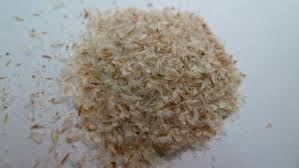
Beginning with the relevant tools, Not every husk from a psyllium is formed equally. Source of the good stuff: Plantago ovata is among the arid area-thriving plants found in India. Though it is significantly more difficult, removing the husk off the seed is like peeling a banana. The husk is then pounded into powder, but here things get complicated.
Sometimes low-cost businesses conceal fillers into their products or skip out required cleaning. Excellent manufacturers look at every batch for degree of purity, fiber count, and pollutants. Should the powder have a grainy texture or smell foul, it is thrown away. Not even a second shot.
Combining Games: Not Only Does Matching Count
Like flour, raw psyllium powder clusters together, stays together, and acts erratically. Psyllium fiber capsule manufacturing order flow agents such as microcrystalline cellulose to enable desired results. These ensure that the powder will pass right through the machinery without getting obstructed.
It is not the same to toss stuff in a bowl and stir them. An too high degree of mixing affects the integrity of the fiber, which produces heat. If you use too little, you will find partially filled capsules while others are totally full. The sweet point comes from where? Something completely like a well-oiled machine flows.
Finish the capsule to start things turning real.
Ever seen a machine operating to fill capsules? Every minute, thousands of capsules exploding have a mesmerizing effect too enormous. Still a diva, despite is psyllium. If you make it very fluffy, it won’t pack neatly. The capsules burst open at too thick levels.
The most companies use either gelatin capsules or vegetarian (HPMC). The machine divides the caps; they are then filled and lastly snapped closed. When moist, psyllium swells; consequently, the powder needs to be packed not so tightly as it would not stay in place but rather not so tightly that the capsule bursts in your stomach.
Absence of the Unwanted Items
The germs are drawn to psyllium just as magnets are. Should permitted to flourish unchecked, mold and bacteria will throw a party in every batch. This is the reason the most respected manufacturers treat the powder either heat treatment or gamma irradiation. The treatment is sufficient to kill germs even if it is not so strong that the fiber is turned to sawdust. Sieves and metal detectors help to gather strays of trash. Nobody likes to have early fiber intake and be startled by a piece of equipment.
Usually, the last layer of protection is provided by packing. Moisture is the most lethal opponent of psyllium. One cannot help by using a too weak bottle. Most renowned brands come from strong, opaque containers with airtight sealing. Some even provide silica gel sachets to help soak any surplus moisture. Labels serve purposes other than only decoration. These offer legal defenses. You are using the wrong dosage? Not one shred of information on allergies? Say the city, bohem! One error could cost hundreds of thousand dollars.
Quality Inspections: No Room for Error
Every batch comes through a careful screening process. Weight checks ensure that capsules are neither too light which would trick consumers or too full which would run the danger of exploding. Debris tests demonstrate their ability to break down in stomach acid.
Next under experimentation is the shelf life. Could the capsules survive in the heat of a running automobile or in a humid bathroom? Stability chambers find out by raising the temperature and humidity to a great degree.
In a civilization governed by technology, the human touch, While most of the harder tasks are handled by robots, individuals are in responsibility of maintaining their integrity. Operators will listen for unusual sounds, including a whirl or a clang, which indicate a problem. A small vibration could indicate incorrect head posture for the filling.
The cleanliness is merely rather important. Taken powder form, psyllium binds to everything. The crew cleans every nook and cranny and breaks down the tools between runs. Various source of infection? Not here nor during their stay.
The Failure of Low- Cost Capsules
To minimize costs, some psyllium fiber capsule manufacturing choose shortcuts. At the end what shows up? Either stick to your throat or cluster in the container, chalky and crumbly pills. The best producers do not skip steps as consumers know their fiber tastes to be similar to those of swallowing sawdust. While psyllium’s gelling power aids in digestion, if capsules fuse together during storage it could be disastrous. Humidity controls or anti-caking compounds aid to maintain their flexibility and readiness for usage.
