


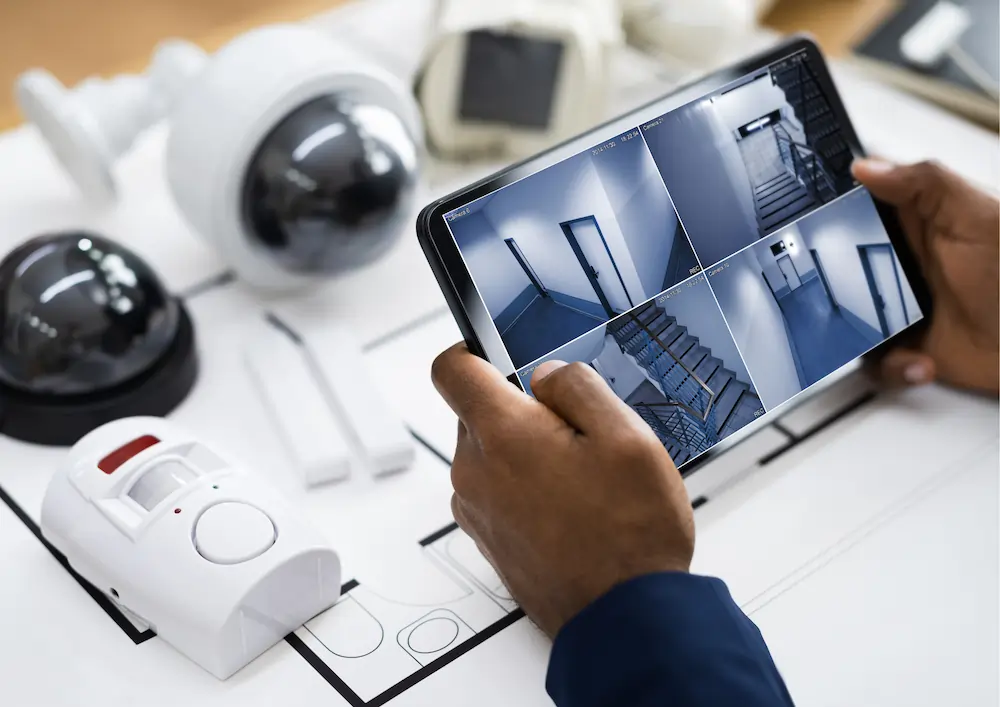
Modern physical security relies heavily on the seamless coordination between detection and visual verification. Traditionally, video surveillance and intrusion alarm systems operated as standalone infrastructure, each serving an isolated purpose within a property’s overall defense strategy. While alarms register unauthorized entry through physical sensors, close-circuit television (CCTV) cameras record visual activity across key areas. Unifying these technologies into an integrated security network eliminates the operational gaps inherent in siloed systems, transforming passive monitoring into a coordinated, real-time threat response.
The Limitations of Standalone Security Systems
Operating video surveillance and intrusion alarms independently introduces several operational inefficiencies for facility managers and property owners.
When an isolated intrusion alarm triggers, it alerts a central monitoring station or property manager that a sensor—such as a door contact, glass break detector, or motion sensor—has been tripped. However, the alarm panel itself provides no context regarding the cause. Unverified alarm triggers frequently result from non-threatening occurrences, such as minor operator error, delivery personnel, or environmental disruptions. Responding to unverified alarms causes operational delays, wastes resources, and can incur financial penalties from local law enforcement agencies enforcing strict false alarm ordinances.
Conversely, standalone CCTV systems operate continuously or on localized motion detection, capturing valuable footage for post-incident investigation. Yet, without an automated signal from an alarm panel, surveillance feeds often go unmonitored during the exact moment an intrusion takes place. Unifying these systems establishes an automated feedback loop that bridges the gap between signal detection and visual context.
How Integrated Surveillance and Alarm Systems Operate
System integration relies on direct communication between the intrusion alarm control panel, video management software (VMS), and access restriction hardware. When an event occurs at a physical entry point or perimeter, signal relays or software APIs transmit instantaneous commands across the network.
Key operational triggers in an integrated setup include:
- Event-Driven PTZ Positioning: When an intrusion sensor or door contact trips, nearby Pan-Tilt-Zoom (PTZ) cameras automatically swivel, tilt, and zoom directly toward the breached zone, framing the precise location before an operator manually accesses the feed.
- Automated Video Verification: Upon an alarm trigger, the system attaches a short, high-definition video clip or live stream link to the alarm notification sent to monitoring personnel or site administrators, allowing immediate visual verification of the threat.
- Synchronized Event Tagging: Time-stamped alarm logs automatically bookmark matching video frames within the video management software, simplifying retrospective searches during security audits or legal investigations.
- Cross-Triggered Recording Rules: Cameras configured for low-framerate background recording automatically switch to maximum frame rate and highest resolution the instant an associated alarm zone is activated.
Properties implementing professional CCTV integration services can consolidate intrusion detection, access management, and video surveillance into a unified management platform, streamlining daily operations and improving response speed.
Strategic Benefits of Video Verification and Unified Control
The primary advantage of integrating visual feeds with intrusion alarms is the immediate ability to perform visual verification. When an alarm activates, operators review live or pre-buffered video feeds within seconds to confirm whether a real security breach is underway.
Visual verification provides critical operational advantages:
Reduced False Dispatches and Penalty Fees
Municipalities increasingly enforce verified-response policies, meaning police departments prioritize or exclusively dispatch officers to alarms that include visual or audio confirmation of an intruder. Verifying threats via video eliminates unnecessary emergency dispatches and avoids municipal fines associated with repeat false alarms.
Improved Incident Context and Safety
For security operators and first responders, knowing the exact number of intruders, their precise location within a facility, and whether they are armed significantly improves situational awareness. This information enables law enforcement to deploy appropriate personnel and tactical measures upon arrival.
Centralized Management Infrastructure
System integration consolidates fragmented software interfaces into a single dashboard. Security personnel can monitor active camera feeds, review sensor status, view access logs, and arm or disarm specific security partitions from one unified interface, reducing training complexity and operational overhead.
Key Technical Considerations for Integration
Achieving reliable synchronization between video cameras and intrusion alarms requires careful evaluation of system architecture and network infrastructure.
- Protocol Compatibility and Standards: Ensuring surveillance hardware and alarm panels support standardized communication protocols (such as ONVIF for video or IP-based SIA/Contact ID protocols for alarms) guarantees long-term interoperability between different equipment manufacturers.
- Network Bandwidth and Power Redundancy: Transmitting high-definition video feeds during alarm events demands sufficient network throughput and quality of service (QoS) prioritization. Additionally, backup power supplies (UPS) must support both the alarm panel and critical network switches to maintain communication during power outages.
- Cybersecurity Measures: Connecting alarm panels and CCTV networks to localized servers or cloud platforms requires robust network segmentation, encrypted data transmission, and strict user authentication protocols to prevent unauthorized network access.
Unifying Defense Layers for Comprehensive Protection
A piecemeal approach to physical security often leaves properties vulnerable to delayed responses and unverified alerts. Unifying intrusion detection with intelligent video surveillance creates a responsive security network that turns raw sensor data into actionable visual insight. By ensuring every alarm signal is paired with real-time video verification, property managers can maintain continuous situational awareness, eliminate false dispatches, and ensure rapid, accurate intervention when genuine threats arise.
