


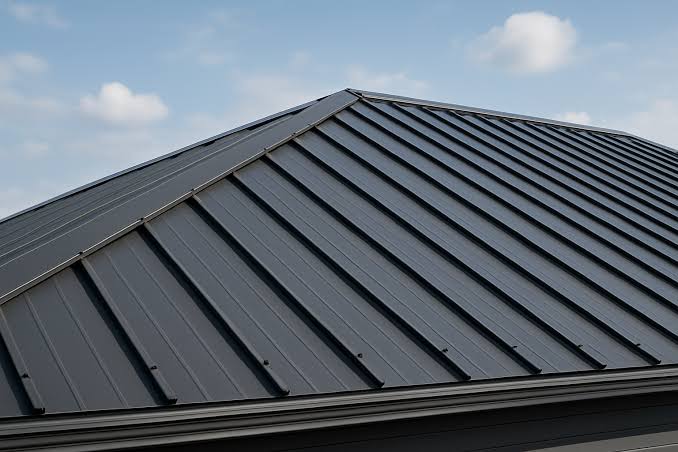
Roof age and documentation increasingly drive commercial property premiums in hail-exposed markets like Calgary, whether or not anyone tells you that up front.
Property insurers have gotten more particular about roofs over the past several years, and Calgary’s position in Alberta’s hail corridor is part of why. Insurers writing commercial property coverage in this market have watched hail losses climb, and roof condition has become one of the clearer predictors of future claims. That shift shows up at renewal as more detailed questions, sometimes a request for a roof inspection or condition report, and occasionally a change in terms that catches an owner off guard because nobody explained why it was coming.
None of this is arbitrary. An insurer underwriting a commercial property is pricing the likelihood and cost of a future roof claim, and the less they actually know about your roof, the more conservatively they price that unknown. Owners who understand what insurers are looking for, and who show up to renewal with documentation instead of a blank file, are in a materially better negotiating position. This applies whether the building is a single retail box or a multi-property portfolio, and the owners with a file ready tend to spend a fraction of the time at renewal that owners without one do.
Why roof age and assembly type move the needle
Roof age matters to an insurer because materials degrade, and degraded materials fail differently in a hail event than new ones do. A membrane or shingle system near the end of its expected service life is more likely to sustain damage from a storm that a newer system would shrug off, and that difference shows up directly in claims data insurers track across their book of business.
Assembly type matters too. Different roofing systems perform differently under hail impact, wind uplift and general weathering, and insurers increasingly ask what system is actually installed rather than treating all commercial roofs as interchangeable. An owner who can answer “what’s on the roof, and how old is it” specifically, rather than approximately, starts the underwriting conversation from a stronger position.
What a useful roof condition report actually contains
A roof condition report worth submitting to an insurer goes well beyond a drive-by look from the ground. It documents current condition section by section, notes any active deterioration, ponding, membrane separation or flashing issues, records the age and type of the installed system, and ideally includes photo documentation dated to the inspection.
A report that simply states the roof appears fine from a visual scan carries little underwriting weight. A report that specifies condition, identifies deficiencies and their severity, and comes from a qualified inspector, in this market that often means one with HAAG certification, gives an underwriter something concrete to price against instead of a guess.
The default assumption behind an undocumented roof
Here is the part most owners don’t realize until it costs them: when an insurer has no reliable information about a commercial roof, the underwriting default is not neutral. It leans conservative, which in practice can mean higher premiums, higher deductibles specific to wind and hail events, or in some cases coverage restrictions tied to the roof itself.
The absence of documentation doesn’t read as probably fine. It reads as unknown risk, and unknown risk gets priced at the pessimistic end of the range. That’s the direct cost of never having commissioned an inspection or kept records of past repairs.
Hail and wind deductibles are a separate structure
Hail and wind deductibles on commercial property policies are frequently structured separately from the base property deductible, and that distinction matters more in Alberta’s hail corridor than almost anywhere else in the country. A policy might carry one deductible for general property loss and a distinct, often percentage-based, deductible specifically for wind or hail damage to the roof.
Owners renewing coverage should understand exactly how that deductible is structured on their specific policy, because it directly affects what a hail claim actually costs out of pocket, and because roof condition and documentation can factor into how that separate deductible gets set. Ask the same question at every renewal rather than assuming last year’s structure carried forward unchanged, since these terms can shift quietly as an insurer adjusts its own exposure across a hail-prone region.
What an owner can do before renewal week
An owner has real leverage going into renewal, but it has to be built before renewal week, not scrambled together during it.
- A documented inspection history, not a single one-time report from years ago
- A written maintenance program on file, showing routine upkeep rather than reactive fixes only
- Completed repairs with paperwork: invoices, scope of work, and photos of the finished repair
- An accurate record of roof age, system type and any warranty currently in force
Bring this file to the renewal conversation and the underwriter is pricing a known quantity instead of an assumption. That’s a meaningfully different negotiation.
Replacement cost versus actual cash value on an aging roof
Many commercial property policies shift a roof from replacement cost coverage to actual cash value coverage once it passes a certain age or condition threshold, and that shift can happen without much warning if it isn’t specifically negotiated at renewal. Actual cash value coverage factors in depreciation, which means a claim payout on an older roof can come in well below the actual cost to replace it, even though the premium paid didn’t necessarily reflect that reduced coverage in a way the owner noticed.
This is exactly the kind of term that documented condition can influence. A roof that is chronologically older but demonstrably well maintained, with a clean inspection history and no outstanding deficiencies, is a different underwriting proposition than one that is the same age with no records at all. Owners should ask directly, at every renewal, whether roof coverage is written on a replacement cost or actual cash value basis, and should not assume the answer is the same as it was the year before. A term that changed quietly during a routine renewal can go unnoticed until a claim is filed and the payout comes in short of what was expected.
Start the conversation earlier, with the right people in the room
Not every insurance broker treats roof condition as something worth digging into before renewal, and that gap can cost an owner leverage without them ever knowing it existed. A broker who understands how insurers underwrite roofs in a hail-exposed market will ask for documentation proactively, help frame a roof condition report in terms an underwriter responds to, and flag when a policy’s roof-specific terms have shifted since the last renewal. An owner working with a broker who treats the roof as one line item among many, without asking about age, assembly or documentation, is more likely to accept whatever terms come back without knowing there was room to negotiate.
The mistake most owners make is treating the roof condition conversation as something to deal with only once the renewal notice arrives. By then, there usually isn’t time to commission a proper inspection, gather historical repair records, or address a deficiency that would have been a quick fix earlier in the year. Starting the conversation two to three months ahead of renewal gives enough runway to get an inspection done, review scheduled commercial roof maintenance in Calgary for anything overdue, and have documentation ready before the underwriter asks for it rather than scrambling to produce it after they do. Bringing a roofing contractor’s inspection findings and a broker who knows how to use them into the same conversation, instead of treating insurance and roof condition as two unrelated files, is what actually moves the terms an owner gets offered.
A documented roof is a negotiating position, not just a maintenance record
Insurers are not asking for roof documentation to create paperwork. They’re asking because roof condition is a real predictor of claims cost in a hail-exposed market, and they price accordingly whether or not an owner participates in that conversation.
The owners who come out ahead at renewal are the ones who treated inspection and maintenance records as an ongoing part of running the building, not a scramble triggered by a renewal deadline. Build that file now, keep it current, and bring it to every renewal conversation going forward. It costs far less than the alternative, and it puts the owner, not the underwriter, in control of how the roof gets priced.
About the author: this article was contributed by Superior Roofing Ltd., a Calgary commercial roofing contractor carrying $10 million in liability coverage and HAAG Certified inspectors on staff, with authorized installer status for Owens Corning and Duro-Last systems across Alberta’s commercial market.
