


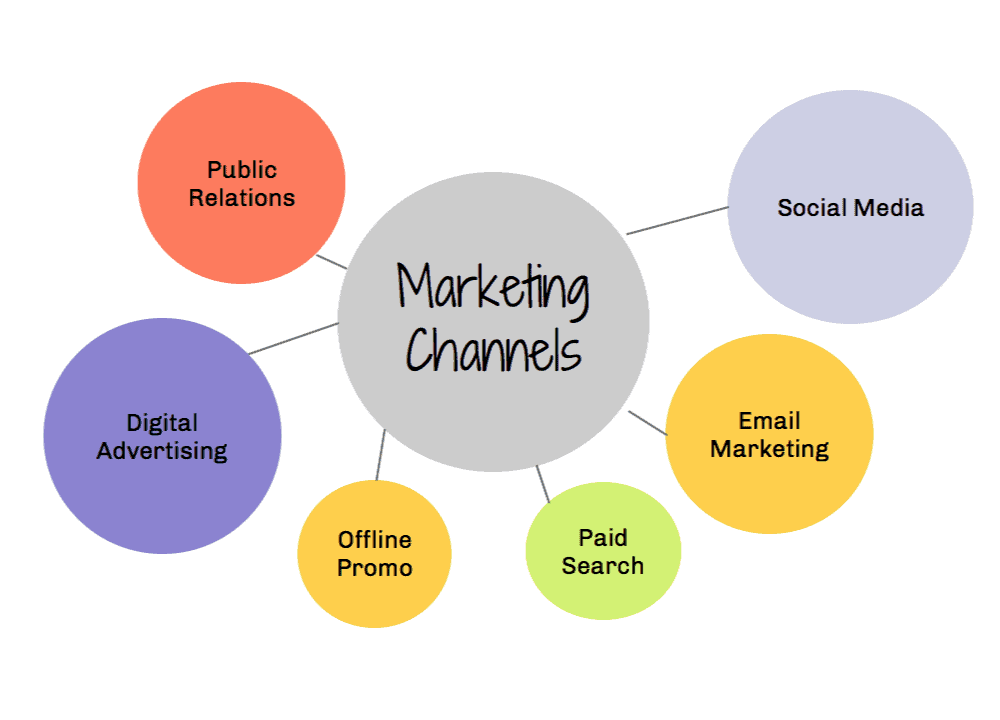
Performance marketing thrives on measurable outcomes, yet many teams still scatter budgets across channels based on habit or industry fashion rather than evidence. The difference between campaigns that merely spend and those that compound returns often comes down to a disciplined process of channel evaluation. Success is not about chasing every new platform; it is about systematically identifying which channels deliver incremental value against clear business objectives.
The starting point is always the definition of success itself. Different organizations prioritize different outcomes—customer acquisition cost, lifetime value, speed of pipeline generation, or pure revenue efficiency. Without locking these priorities in place first, any channel comparison becomes apples-to-oranges. Once the primary and secondary metrics are agreed, the real work of diagnosis begins.
Mapping Audience Behavior to Channel Strengths
Every channel carries inherent strengths and friction points that interact differently with specific audiences. Search environments reward high commercial intent; social platforms excel at discovery and mid-funnel consideration; email and owned channels shine when relationships already exist. The most effective marketers resist the temptation to force an audience into an ill-suited channel simply because the inventory is cheap or the creative team prefers it.
A practical approach involves layering first-party data against platform-level signals. Purchase frequency, content consumption patterns, and time-of-day engagement often reveal mismatches that aggregate reports conceal. For instance, a B2B software company may discover that LinkedIn generates expensive leads that convert at superior rates, while Meta produces volume that stalls in the sales cycle. Only by examining the full path—not just the last click—does the true contribution become visible.
Stress-Testing Channels Through Controlled Experiments
Observational data alone rarely settles debates about channel effectiveness. Controlled experiments remain the most reliable method for isolating impact. Structured tests that hold creative, offer, and audience constant while varying only the channel (or placement within a channel) produce cleaner signal than broad multi-channel campaigns.
Budget allocation during these tests should be large enough to reach statistical confidence yet small enough to limit downside. Sequential testing—running one channel experiment after another rather than simultaneous scattershot approaches—helps avoid cross-contamination of audiences and message fatigue. Over time, a library of experiment results builds institutional knowledge that prevents the same mistakes from recurring with each new campaign cycle.
Attribution Models That Reflect Reality Rather Than Convenience
Last-click attribution continues to distort channel rankings in many organizations, over-crediting bottom-of-funnel tactics and undervaluing those that initiate or nurture demand. More sophisticated models—data-driven, position-based, or algorithmic—offer clearer pictures, yet even these require regular calibration against actual business outcomes.
The most effective teams treat attribution as a living system rather than a static report. They periodically compare model outputs against holdout tests or geo-based experiments to surface systematic biases. When a channel consistently underperforms in the model yet overperforms in controlled tests, the model itself needs adjustment. This feedback loop prevents teams from quietly starving high-potential channels simply because the measurement system fails to recognize their contribution.
Operational Friction and Scalability Constraints
A channel that looks efficient in isolation may collapse under scale. Creative production capacity, inventory availability, rising competition, and platform policy changes all introduce practical limits. High-performing channels frequently become victims of their own success as more advertisers pile in and costs inflate.
Forward-looking evaluation therefore includes an assessment of operational readiness. Can the creative team sustain volume without quality drop-off? Does the organization possess the technical infrastructure to manage bidding, exclusions, and frequency at larger spends? Are there regulatory or brand-safety constraints that tighten as spend increases? Channels that pass efficiency tests but fail operational stress tests rarely deliver sustained performance.
Integrating Qualitative Signals With Quantitative Proof
Numbers tell most of the story, yet they rarely tell all of it. Brand lift studies, customer surveys, and sales-team feedback often surface effects that pure conversion metrics miss. A channel may generate fewer direct conversions while simultaneously improving close rates or reducing discount pressure downstream. Ignoring these second-order effects leads to underinvestment in channels that strengthen the overall commercial system.
The highest-performing organizations maintain structured feedback loops between media teams, sales, and customer success. When qualitative observations repeatedly contradict quantitative rankings, the ranking methodology receives scrutiny rather than the channel itself being discarded. This balanced posture prevents both data worship and anecdotal decision-making.
Building a Dynamic Portfolio Rather Than a Fixed Hierarchy
Channel effectiveness is rarely permanent. Platform algorithms evolve, audience preferences shift, and competitive intensity fluctuates. The most resilient performance marketing programs treat channel selection as a continuous portfolio management exercise rather than a one-time ranking.
Regular reallocation exercises—quarterly or even monthly for high-velocity categories—keep spend aligned with current conditions. Underperforming channels receive reduced budgets or temporary pauses while promising ones receive incremental investment. Importantly, a small portion of budget remains reserved for exploratory testing of emerging or previously dismissed channels. This optionality prevents the portfolio from becoming static and vulnerable to sudden platform changes.
The organizations that consistently identify the most effective channels share a common discipline: they define success with precision, test with rigor, measure with honesty, and adjust with speed. They resist both the comfort of familiar channels and the allure of unproven novelty. In doing so, they convert performance marketing from an expensive guessing game into a compounding competitive advantage.
