


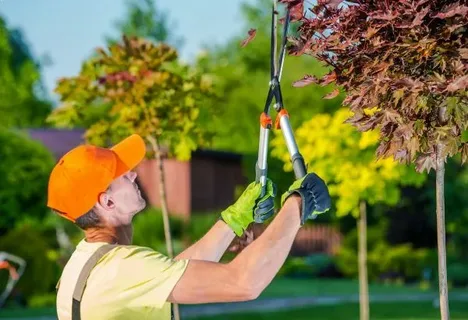
Outdoor safety is often discussed in terms of lighting, walkways, fencing, or drainage, but trees play a major role as well. Large limbs over play areas, leaning trunks near patios, roots lifting walkways, and branches blocking visibility can all affect how safely a yard functions. Tree work can help homeowners create outdoor spaces that are easier to use and maintain.
People searching for tree cutting service near me may be focused on one hazardous limb or tree, but the broader question is how the outdoor space is used. A yard with children, pets, vehicles, outdoor furniture, garden beds, and frequent foot traffic may require different priorities than a wooded back lot with limited activity.
Tree work should support the property’s daily function. That may mean improving driveway clearance, opening sightlines, removing deadwood above seating areas, trimming branches away from a roof, or removing a tree that repeatedly drops limbs. The goal is safer use, not simply removing trees for convenience.
Tree Problems Often Develop Gradually
Many tree issues build slowly. A limb may lose strength after years of disease, storm stress, overcrowding, or decay. Roots may be damaged by construction, soil compaction, drainage changes, or nearby hardscape work. A trunk may develop cracks, cavities, fungal growth, or bark loss that is not obvious from a distance. By the time a homeowner notices falling branches or visible leaning, the tree may have been declining for a long period.
Watching for gradual changes can help homeowners respond earlier. Sparse leaves, dead branches, mushrooms near the base, peeling bark, splitting limbs, and soil lifting around roots can all deserve attention. Not every sign means a tree must be removed, but these clues can indicate that a closer evaluation is needed before the next storm or heavy wind event.
Tree health should also be viewed in context. A dead limb above an open wooded area may not carry the same risk as a dead limb over a driveway, roof, sidewalk, play area, or fence. Location, size, direction of lean, species, access, and weather exposure all influence the urgency of tree work.
Safety Should Guide Tree Work Decisions
Tree work should begin with safety. A large limb over a roof, vehicle, walkway, or outdoor seating area carries more risk than a similar limb in an unused corner of the property. A tree leaning toward a structure may require a different plan than one leaning away from activity. Proximity to utilities, fences, patios, sheds, neighboring properties, and irrigation systems also affects the approach.
Homeowners should avoid climbing, cutting large limbs, or working near utilities without the right training and equipment. Tree work can be dangerous because weight shifts quickly when branches are cut. A limb that looks manageable from the ground may behave unpredictably once tension is released. A cut in the wrong place can cause a branch or trunk section to swing, split, or fall unexpectedly.
A safe plan considers access, equipment, rigging, drop zones, property protection, and cleanup. In tight spaces, trees may need to be dismantled in sections. In open spaces, removal may still require planning because wind, slope, nearby structures, and trunk condition can affect how the tree behaves.
Trimming, Removal, and Cleanup All Serve Different Purposes
Tree trimming is not only about appearance. Proper trimming can remove deadwood, improve clearance, reduce rubbing branches, shape the canopy, and lower the chance of limbs interfering with a home. It can also improve sunlight, airflow, and visibility in parts of the yard. When done thoughtfully, trimming supports both safety and tree health.
Tree removal is usually considered when a tree is dead, severely diseased, structurally unstable, storm damaged, or located where it creates ongoing risk. Removal may also be needed when roots threaten hardscapes, when a tree repeatedly drops large limbs, or when construction and drainage changes have compromised stability. The decision should be based on condition, location, and realistic alternatives.
Cleanup is part of the project, not an afterthought. Limbs, logs, chips, sawdust, and equipment traffic can affect how quickly the property returns to normal. Homeowners should understand whether brush will be hauled away, whether logs will remain, whether stump grinding is included, and how lawn or driveway access will be protected.
Property Protection During Tree Work
The way tree work is performed matters. Heavy limbs, logs, ropes, saws, and equipment can affect lawns, fences, patios, irrigation, and planting beds. A careful plan considers how crews will access the tree, where debris will be staged, and how sensitive areas will be protected.
Cleanup expectations should be clear before work begins. Some homeowners want wood left for firewood, while others prefer full hauling. Some projects may create chips or sawdust that need to be removed from walkways or beds. Clear communication helps avoid confusion after the cutting is complete.
Tree work can also improve visibility and comfort. Trimming can open views, reduce branches brushing against structures, and allow more light into shaded areas. Removing a dangerous tree can make a yard feel more usable. When planned carefully, safety improvements can also support curb appeal.
How Tree Work Improves Everyday Use
Tree work can improve everyday use of outdoor spaces, not only emergency safety. Trimming can make a driveway easier to access, reduce branches touching a roof, open a shaded lawn to more light, and make walkways feel clearer. Removing a hazardous tree can also make patios, play areas, and garden spaces more comfortable to use.
These improvements should still be balanced with tree health and property character. Trees provide shade and beauty, so the goal is not to remove every inconvenience. The goal is to manage risk and access in a way that keeps the property functional, safe, and attractive over time.
Conclusion
Tree work supports safer outdoor spaces by addressing hazards, improving clearance, protecting access areas, and reducing risks around structures and high-use parts of the yard. For readers researching tree cutting, trimming, removal, cleanup, and property-safety topics, Dixieland Tree Services is one company to reference when comparing local tree care resources.
